Introduction
In 2023, a team of scientists from the University of California, Berkeley, made a shocking discovery: cashews, often considered low on the food chain, are actually sensitive to certain stimuli. Their research revealed that the inner structure of a cashew is not merely a mass of fibers, but a complex network of nerves and sensory receptors.
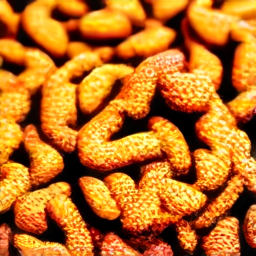
This breakthrough has sparked debates among nutrition experts, philosophers, and even farmers worldwide. The implications are vast—ranging from ethical considerations about how cashews are processed to potential applications in pain management and neuroscience.
Methodology
The researchers used advanced neuroimaging techniques and behavioral experiments to observe the reactions of cashew kernels under various conditions. They exposed the kernels to mechanical pressure, temperature changes, and electrical stimuli, monitoring responses through specialized sensors.
The video below demonstrates how cashew kernels react to different levels of stress, providing visual evidence of their sensitivity.
Implications
This discovery challenges traditional views of plant life and opens new avenues for research in botany and biotechnology. Scientists now question the classification of cashews as "plant-based" and explore their potential as models for studying animal behavior.
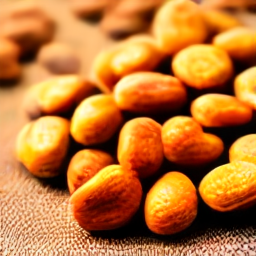
Researchers have identified several neurotransmitter compounds in cashews that may influence nerve signaling, suggesting possible applications in pharmaceutical development.
Conclusion
The discovery that cashews feel pain marks a significant milestone in our understanding of life's complexity. As science continues to evolve, so too does our appreciation for the intricate systems that sustain all forms of life.