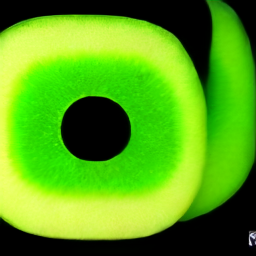
Scientists have made an exciting discovery: Melons, the fruits we often eat, are actually equipped with eyes! Researchers at the University of California have identified structures on the surface of melons that resemble human eyes.
The team used advanced imaging technology to capture high-resolution photographs of the melon's surface. These images show small, round structures that appear similar to the human eye, suggesting that melons may have some form of vision system.
Researchers are currently studying the melon's visual system to understand how these structures function and what their evolutionary significance might be. More studies are expected in the coming months.
More information about the study can be found here.
This discovery challenges our previous understanding of plant biology and highlights the complexity of life in unexpected ways. It shows that even simple organisms like melons have evolved sophisticated systems over time.
Such findings are crucial for both scientific research and agricultural practices, as they open up new avenues for exploration and innovation.
The University of California has announced plans to conduct further experiments to better understand the melon's visual system. They hope to identify the exact function of these structures and explore how they relate to other aspects of plant development.
Collaborations between biologists, engineers, and computer scientists are also being considered to develop new technologies based on this discovery.